Forest Service Moves Forward With Disaster Recovery

Forest Service Moves Forward With Disaster Recovery

The U.S. Forest Service announced that significant recovery efforts across national forests and grasslands continue to progress following damage caused over three years of natural disasters, including hurricanes, wildfires and flooding.

These efforts were made possible by $6.35 billion in disaster recovery supplemental funding allocated to the agency through the American Relief Act of 2025. These supplemental funds are targeted to support the restoration of infrastructure and natural resources across half the National Forest System following disasters between 2022 and 2024.

The agency’s disaster recovery work is focused on restoring access, rebuilding recreation sites, reducing wildfire risk, restoring ecosystems, supporting communities, and preparing for future disasters.

The following actions are examples of how the agency work is progressing:

• Restoring Access: FS staff, partners and volunteers have been restoring critical access for emergency responders, private landowners, recreation seekers, and land managers. In California, road repair work continues across national forests affected by widespread damage from 2022-2023 atmospheric rivers. Recently, the Shasta-Trinity National Forest repaired and reopened 63.8 miles of roads, removed over 700 downed trees, regraded 35 miles of road and repaired eight landslides and four washouts. This work restored access to power infrastructure, private property, and firefighting routes. Nearby in the Six Rivers National Forest, 25 miles of roads were repaired within the Smith River National Recreation Area, improving access to campgrounds, trailheads, and active management sites.  

• Reducing Wildfire Risk: The Forest Service is using a combination of salvage logging and prescribed fire to reduce wildfire risk in the aftermath of disasters that damaged and killed trees. Following the effects of Hurricane Beryl, for example, the National Forests and Grasslands in Texas are focusing on reducing new hazardous fuels in the wildland-urban interface caused by downed trees, new growth and invasive species. To further bolster efforts, the agency established a Good Neighbor Agreement with the Jena Band of Choctaw Indians to leverage tribal crew capacity.  

• Rebuilding Recreation Infrastructure: In Virginia, construction access to the Virginia Creeper National Scenic Trail on the George Washington and Jefferson National Forest was restored in late 2025, allowing repair work to begin. Hurricane Helene catastrophically damaged half of the 34 mile trail. The damaged portion of the trail is scheduled to reopen by the end of 2026. 

googletag.cmd.push(function() { googletag.display('div-gpt-ad-1548375988914-0'); });

• Restoring Ecosystems: In Montana, the Bitterroot National Forest worked with partners and volunteers to install 35 structures that mimic natural beaver dams in a watershed damaged by the Trail Ridge Fire. These beaver dam analogs will promote vegetation recovery and improve the overall watershed. In Tennessee, the Cherokee National Forest removed about 47,000 cubic yards of debris after Hurricane Helene along the Pigeon River, seeded the sites to prevent erosion and invasive species spread, and collected 960 pounds of oak acorns to support reforestation.  

• Supporting Communities: In Oregon, the Willamette National Forest is working with a contractor and the community of Oakridge to provide no-cost firewood to low-income community members following the Cedar Creek Fire. This fuelwood comes from low-value, damaged timber salvaged from the burn scar. Across the west, the FS is also working to repair rangelands and range infrastructure, such as fencing, to support ranchers in the aftermath of wildfires.  

• Working Together: The Forest Service is working with state, tribal and county governments, as well as many non-governmental partners, to coordinate efforts and share capacity. In North Carolina, the Pisgah National Forest is supporting the North Carolina Department of Transportation and the Federal Highway Administration in rebuilding I-40 by providing fill materials from the nearby national forest—speeding the project up an estimated threefold and saving taxpayers millions. I-40 is a critical route through the Appalachian Mountains, with thousands of vehicles traveling the highway each day.  

Preparing For The Next Event: Disasters occur year-round, and the agency is proactively preparing for those inevitable events. In Oregon and California, the agency partnered with Sierra-Pacific Industries to establish a system of new fuel breaks strategically placed at key sites in high-risk areas. In Utah and Nevada, the FS is supporting communities in acquiring equipment necessary for reducing hazardous fuels in high-risk communities, while also supporting on-the-ground thinning and restoration efforts on private forest lands. 

The American Relief Act and previous other disaster recovery supplemental funds have been vital in enabling crucial disaster recovery efforts. Disaster recovery is an agency priority, and the Forest Service will continue leading efforts to restore the national forests impacted and support the communities that depend on them.

Latest News

Nordic Veneer Announces Closure 

Long-established veneer production facility Nordic Veneer is closing the veneer plant near Roseburg, Ore. it purchased from Forest Industries in 1960. Nordic Veneer was founded in 1954 by Dick Adams and Norm Jacobsen when they…

Find Us On Social

googletag.cmd.push(function() { googletag.display('div-gpt-ad-1548376916922-0'); });
googletag.cmd.push(function() { googletag.display('div-gpt-ad-1548376961890-0'); });
googletag.cmd.push(function() { googletag.display('div-gpt-ad-1548377005333-0'); });
Newsletter

The monthly Panel World Industry Newsletter reaches over 3,000 who represent primary panel production operations.

Subscribe/Renew

Panel World is delivered six times per year to North American and international professionals, who represent primary panel production operations. Subscriptions are FREE to qualified individuals.

Advertise

Complete the online form so we can direct you to the appropriate Sales Representative. Contact us today!
Manthei Wood Products Purchases Cahaba Veneer In Alabama

Manthei Wood Products Purchases Cahaba Veneer In Alabama

Bibb County Economic & Industrial Development Authority (EIDA) announced that Manthei Wood Products, a nationally recognized, family-owned hardwood veneer manufacturer, has acquired Cahaba Veneer in Centreville, Ala. and will invest $10 million and create 37 jobs, while retaining 67 jobs.

Cahaba Veneer, founded in 1995, has been a vital part of Bibb County’s industrial base. Known for its high-quality hardwood veneer and ability to serve specialized markets—including engineered flooring, custom plywood, and niche applications such as skateboard veneer—the company has built a reputation for craftsmanship and adaptability.

Manthei Wood Products brings a legacy dating back to the 1940s, when the Manthei family began producing veneer in Michigan. Now in its third generation of family leadership, Manthei has grown into a respected leader in the hardwood veneer industry, known for innovation, quality, and long-term investment. 

googletag.cmd.push(function() { googletag.display('div-gpt-ad-1548375988914-0'); });

The acquisition ensures continued operations at the Centreville facility. Not only is this important in terms of future economic impact, but it also helps secure the future for one of Bibb County’s oldest and best known places of business, as the facility Manthei is investing in dates back to around the year 1900, when it was owned by the Belcher family and over the years has made everything from hardwood flooring to broom handles.

“MWP is a third-generation family business based in Petoskey, Michigan focusing on converting North American hardwood timber into veneer and plywood, with the mission to cultivate God-given potential in our people and forests so our families, communities, and world flourish,” comments Abe Manthei, president of Manthei Group. “This new plant will be a key piece in our wood manufacturing business, allowing us to expand our plywood and veneer operations through both vertical integration and new product offerings.”

“The forest products industry is a cornerstone of Alabama’s rural economy,” adds Stephanie Fuller of the Alabama Forestry Assn. “Investments like this strengthen the entire supply chain and ensure long-term sustainability and innovation in our industry.”

Latest News

Nordic Veneer Announces Closure 

Long-established veneer production facility Nordic Veneer is closing the veneer plant near Roseburg, Ore. it purchased from Forest Industries in 1960. Nordic Veneer was founded in 1954 by Dick Adams and Norm Jacobsen when they…

Find Us On Social

googletag.cmd.push(function() { googletag.display('div-gpt-ad-1548376916922-0'); });
googletag.cmd.push(function() { googletag.display('div-gpt-ad-1548376961890-0'); });
googletag.cmd.push(function() { googletag.display('div-gpt-ad-1548377005333-0'); });
Newsletter

The monthly Panel World Industry Newsletter reaches over 3,000 who represent primary panel production operations.

Subscribe/Renew

Panel World is delivered six times per year to North American and international professionals, who represent primary panel production operations. Subscriptions are FREE to qualified individuals.

Advertise

Complete the online form so we can direct you to the appropriate Sales Representative. Contact us today!
Tenth PELICE Lives Up To Billing In Atlanta

Tenth PELICE Lives Up To Billing In Atlanta

TENTH PELICE LIVES UP TO BILLING IN ATLANTA

Known as “the last conference in the world,” PELICE provides boost of enthusiasm for all segments of the panel industry.

ATLANTA, Ga.
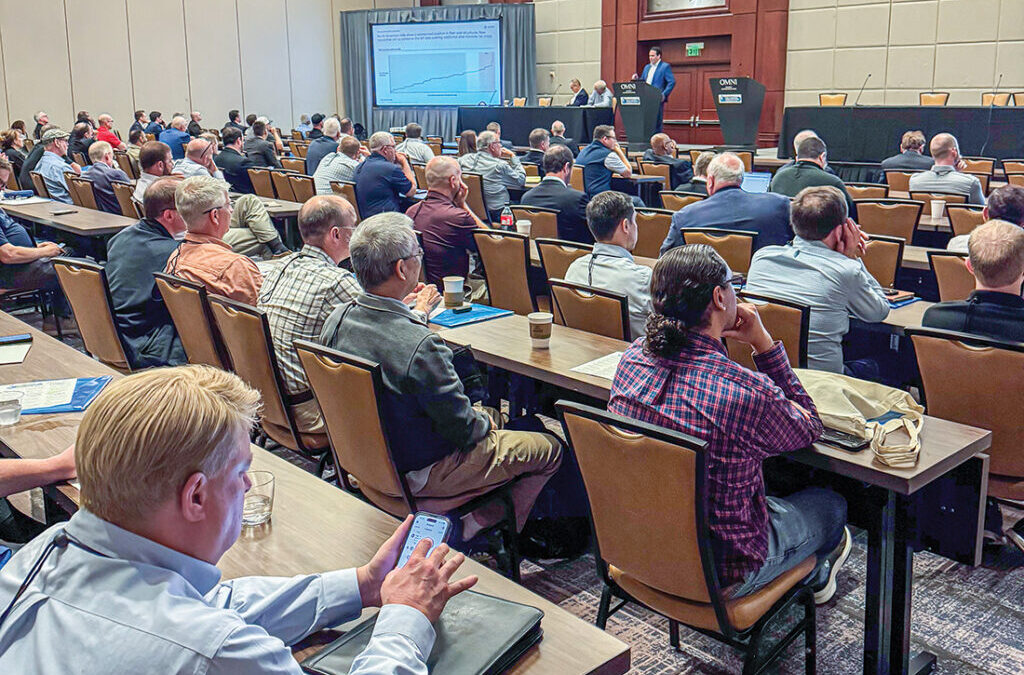
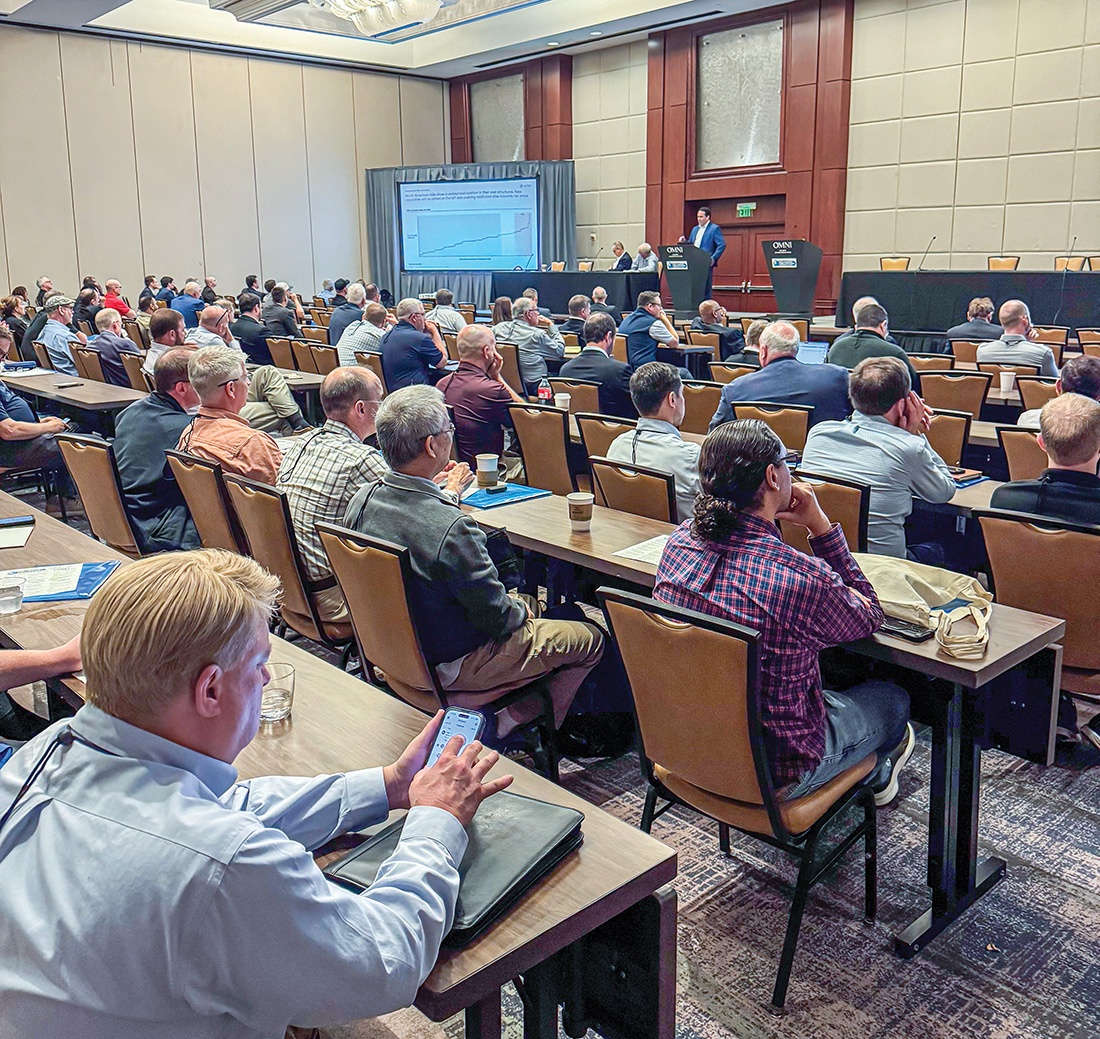
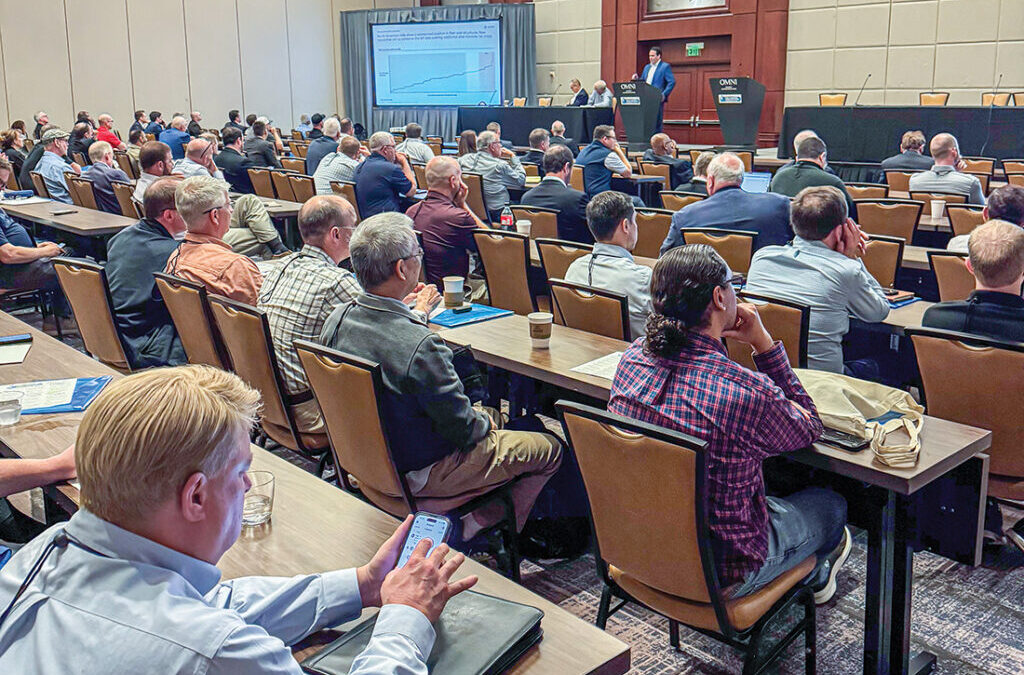
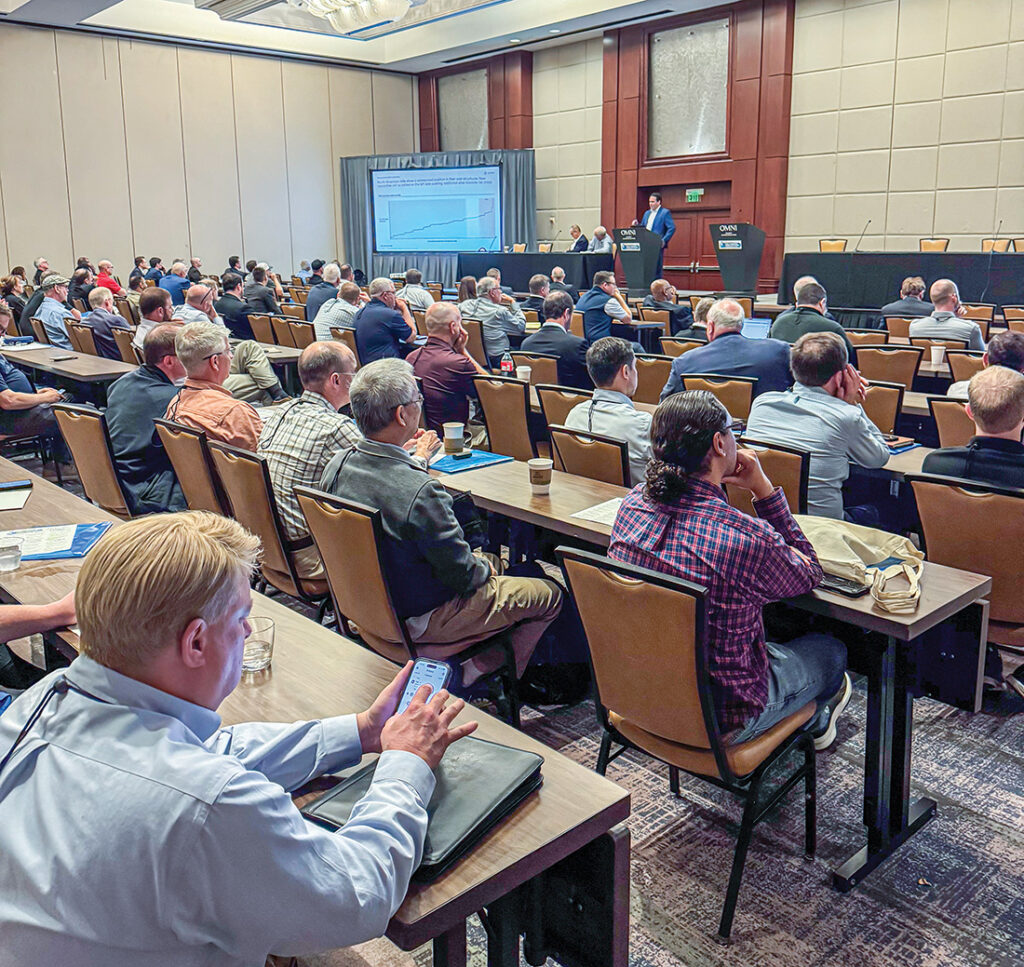
Forty-one speakers, 470 registrants and 95 exhibitors contributed to the 10th Panel & Engineered Lumber International Conference & Expo (PELICE) held April 16-17 at the Omni Atlanta Hotel at Centennial Park.

The event, which is co-hosted by Panel World magazine and Georgia Research Institute, is held every other year, with the first one occurring in 2008. That this was number 10 was an ongoing discussion, including the recognition of 18 exhibitor companies that have participated in all 10. 

During the opening session, PELICE Co-Chairman and Panel World Editor-in-Chief Rich Donnell recognized Co-Chairman and GRI President Fred Kurpiel as conceiving the idea of PELICE and approaching Donnell and Panel World for a partnership back in 2006.

Twenty-five producer companies sent management personnel to soak in the non-stop rush of information and technologies, and the event began with speeches from producer executives.

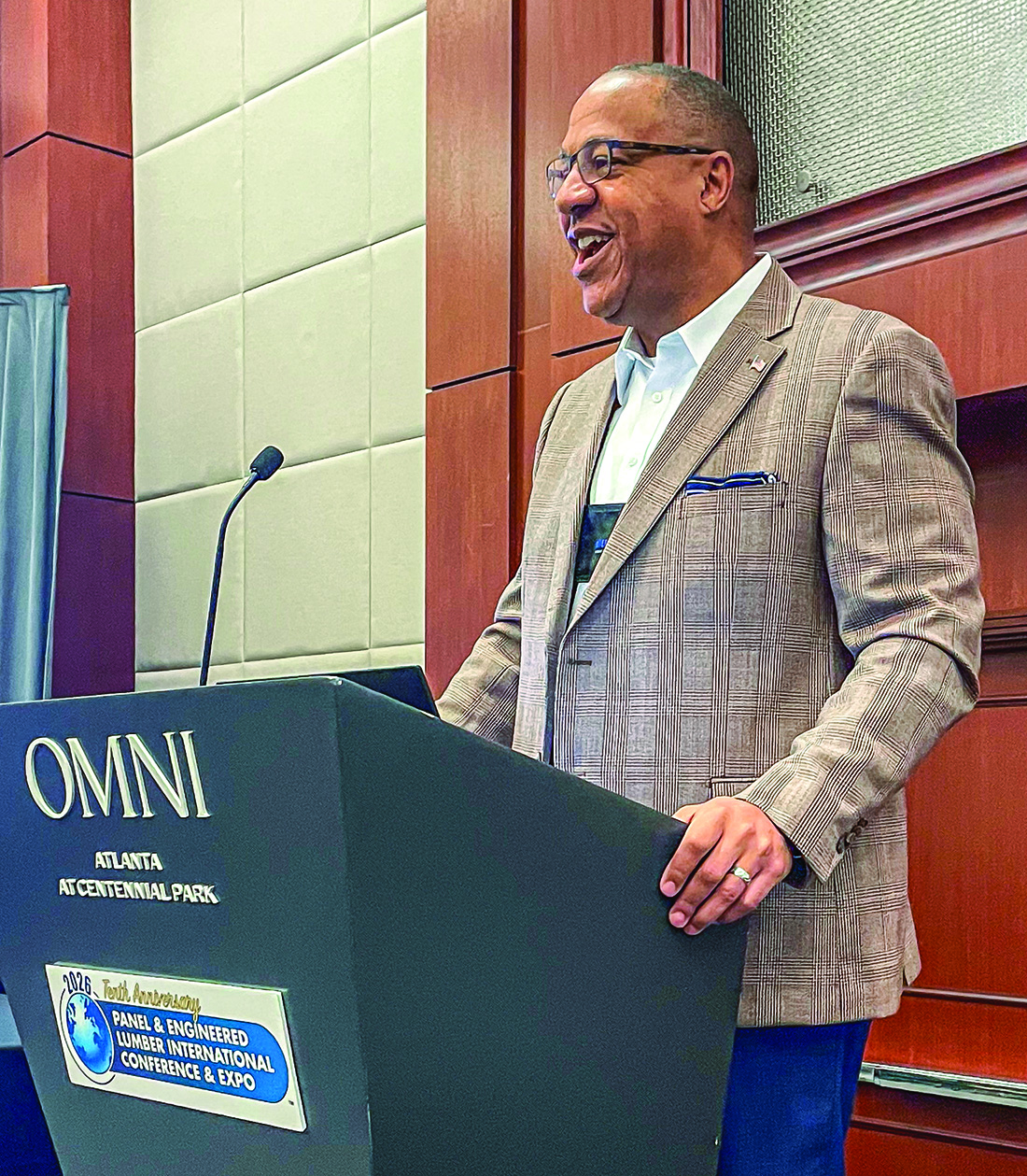
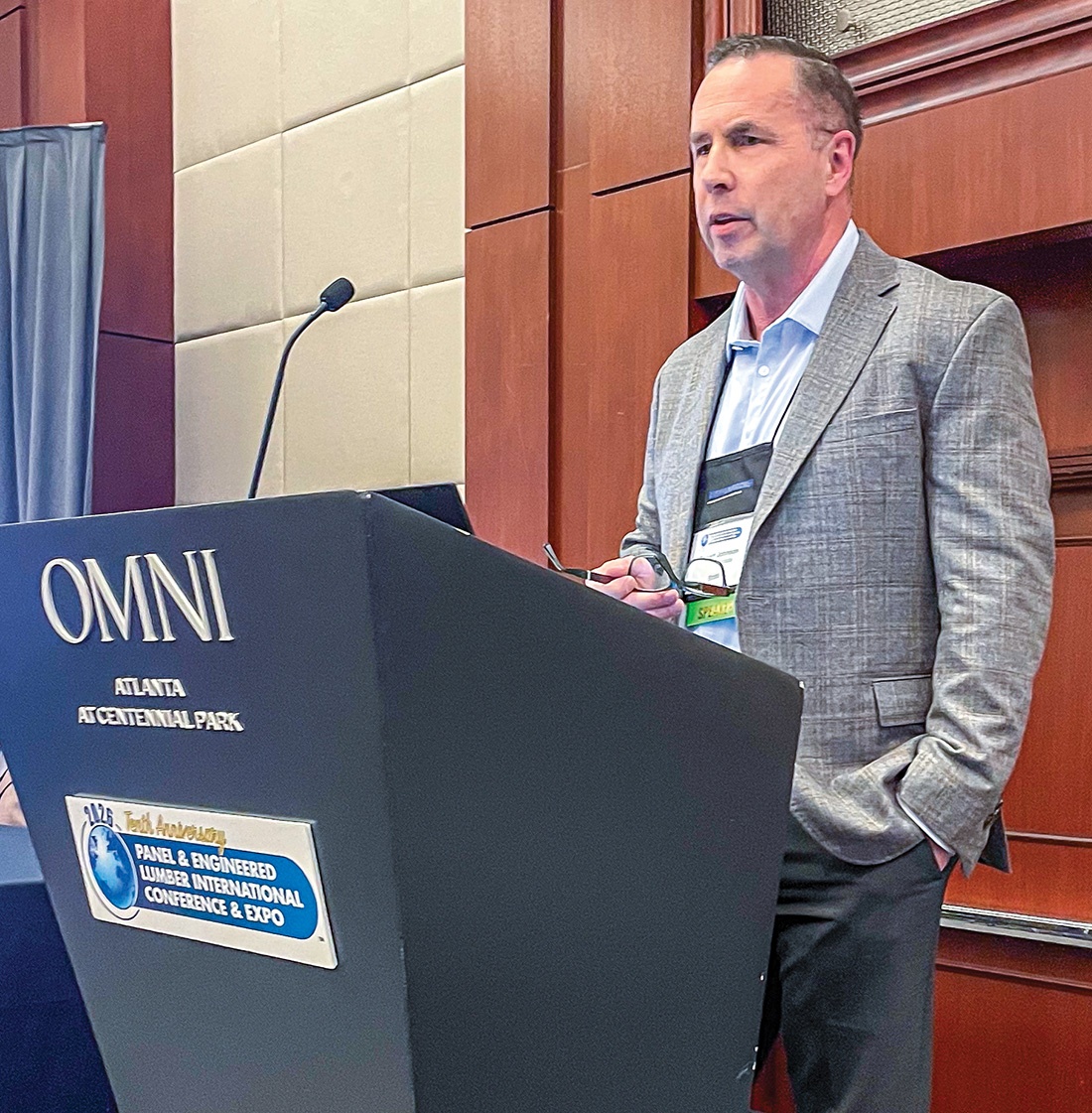
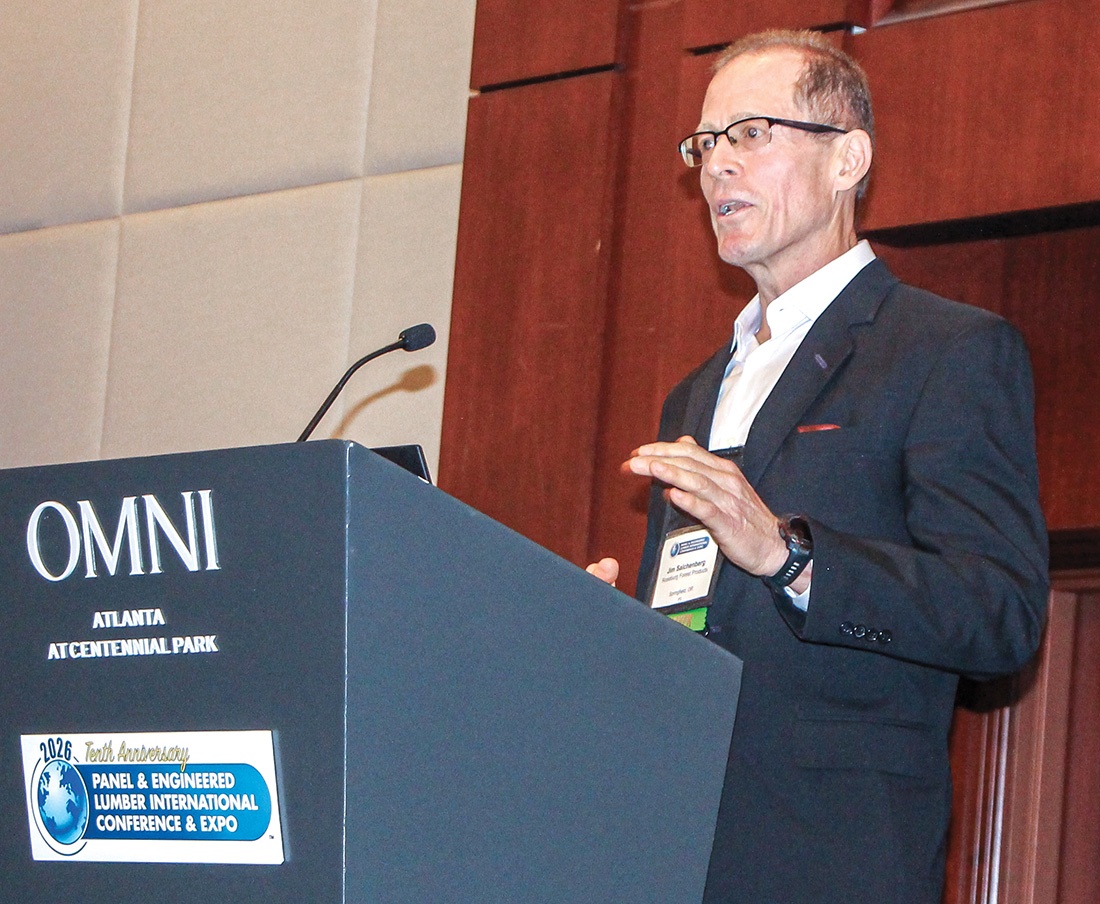
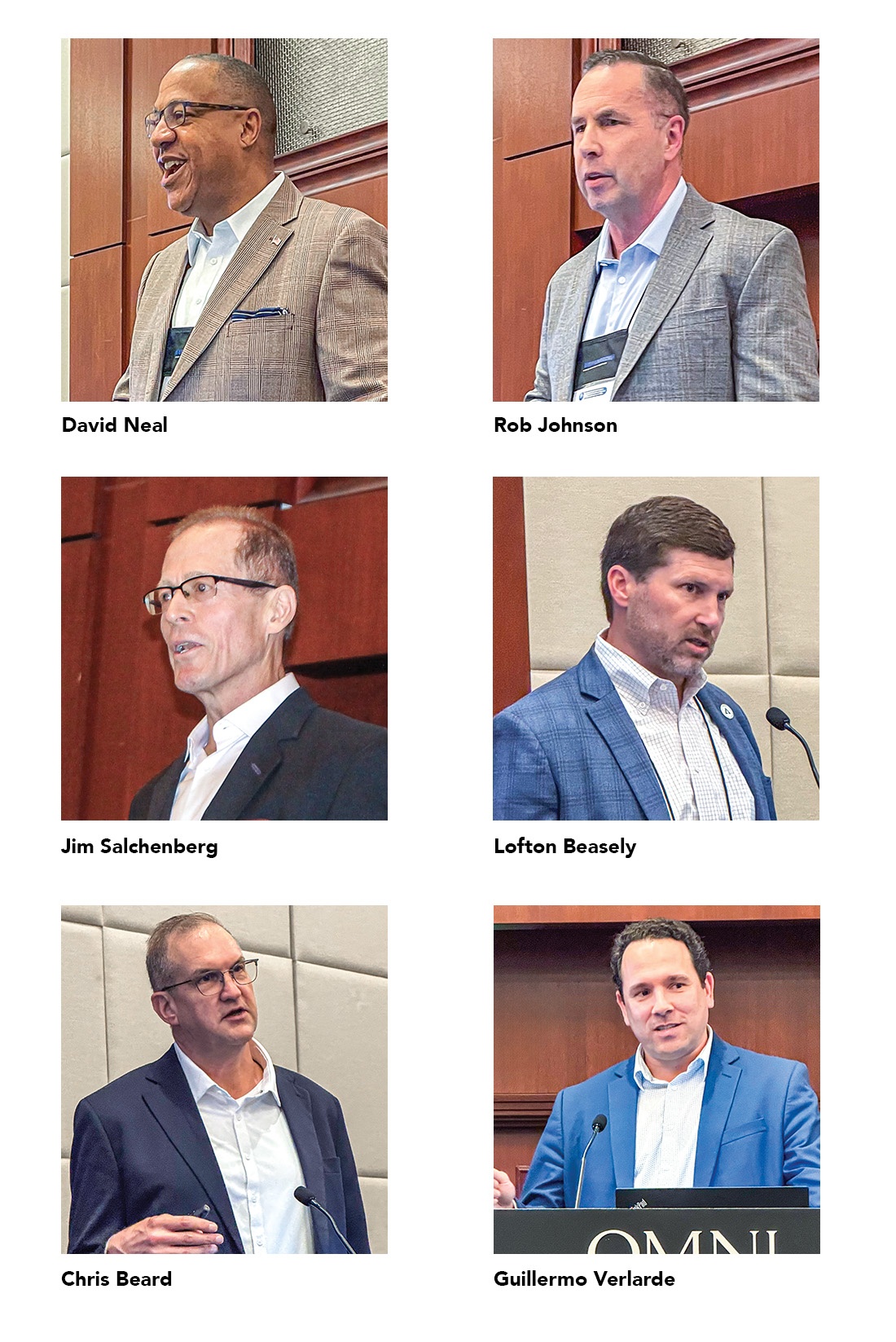
Three first morning keynote speakers addressed a full house in the Grand Ballroom North, leading off with David Neal, Vice President of Building Products at Georgia-Pacific; followed by Rob Johnson, Senior Vice-President of Manufacturing Operations at Boise Cascade; and Jim Salchenberg, Director of Strategic Projects at Roseburg.

googletag.cmd.push(function() { googletag.display('div-gpt-ad-1548375988914-0'); });

A very active contributor himself to developments in Atlanta, Neal addressed GP’s longstanding role in the community and cultural affairs. He emphasized the importance of employee growth through a combination of in-house guidance and cultural awareness, leading to the building of relationships and trust in business and outside of business.

Neal, who has held numerous leadership roles at GP and started there in 1997 as a quality resource manager, focused on three GP people who have excelled with those principles, including Curley Dossman, President Community Programs, who leads GP’s charitable giving program and oversees the company’s community affairs efforts; along with Soy Sharjary, Vice President of Finance Building Products, who began with GP in 2003 as a lab technician; and Mark Atkins, Senior Vice President, Strategic Accounts.

Neal pointed to the three men and to GP overall as intertwining this model of community relationships and the on-the-ground betterment of the lives and awareness of the underprivileged, with building on efforts to not only establish partnerships and provide products to customers but to evolve with customers and provide new opportunities and capabilities that meet the changing needs of these “preferred partners.”

Boise Cascade’s Johnson spoke on the perhaps historically-based misimpressions of what Boise has truly evolved into today—one of the largest wholesale distributors of building products in the U.S., and one of the largest producers of LVL, I-Joist and plywood in North America with 18 manufacturing locations.

He said the company has resisted the urge to diversify its portfolio significantly, opting to remain with its expertise in an integrated framework regardless of market conditions. And he added that the distribution element stabilizes extreme swings in financial performance, providing margin consistency across market bounces.

More specifically to wood products, Johnson stated, “We are an EWP focused business. Our veneer mills also produce plywood, but we consider it a byproduct of strength rated veneer production.”

He said the business is geared to self-sufficiency of supply in veneer production—95% self-sustained in veneer in the West and 100% in the Southeast—supported by continued modernization of facilities.

Why EWP? Johnson said builders demand EWP in new home construction as a superior solution in consistency of design and building practice while reducing waste.

Only days after Roseburg announced it was resuming construction of a new MDF plant in Dillard, Ore., that project and others as part of a billion dollar capital investment program was addressed by Jim Salchenberg, Director of Strategic Projects at Roseburg.

Salchenberg noted that a stack of a billion one-dollar bills reaches higher than where commercial planes fly, and he added that the legacy of “big” at Roseburg was started by founder Kenneth Ford. Salchenberg said Roseburg approved more than 400 capital projects totaling more than $1.1 billion from 2021-2024. He said the new MDF mill in Dillard is planned for startup in late 2028, and is being built where the long-running now shuttered particleboard mill was.

Roseburg delivered the capital portfolio of projects within 3% of investment goals despite post-Covid challenges, according to Salchenberg, who provided three tips for budget control: Own the budget (manage every sub-cost within the budget); protect the scope relentlessly; and never accept “it takes what it takes, and it costs what it costs.”

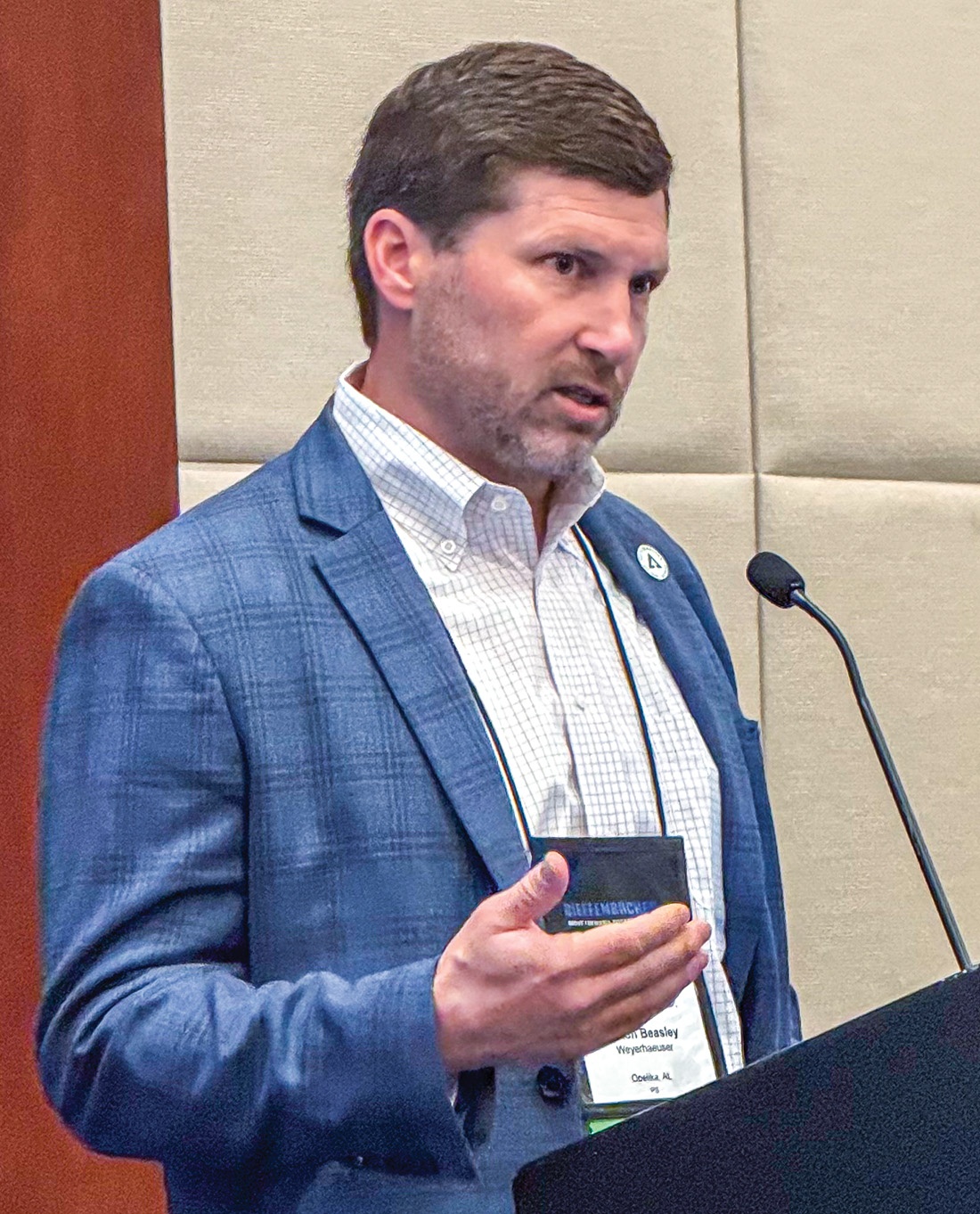
Another keynote speaker from the producer sector, who spoke on the second morning of PELICE, was Lofton Beasley, Product Manager at Weyerhaeuser. He spoke on driving strategic growth for engineered wood products and innovative approaches to expanding engineered wood markets.

Beasley said there is a strategic urgency behind accelerating growth in EWP, emphasizing that structural changes in the construction industry are shifting demand away from traditional commodity products toward engineered, system-based solutions that deliver speed, predictability, and performance. Customers—ranging from builders to designers—are increasingly focused on solutions that mitigate labor shortages, reduce variability, and shorten build cycles. 

“These forces are structural, not cyclical, meaning they will persist regardless of short-term market fluctuations,” he said, adding that the opportunity for Weyerhaeuser is to improve its long-term earnings profile by leaning into differentiated engineered products that are less exposed to commodity price volatility. 

“The key executive message is that while housing markets may be volatile in the near term, strategic action must be taken now to position EWP as a durable growth engine that delivers sustained value creation across market cycles.”

Building codes and standards increasingly favor engineered solutions due to their structural performance and reliability, Beasley added. At the same time, persistent labor constraints and risk aversion among builders are accelerating the adoption of repeatable, prefabricated, and system-based construction approaches. 

Weyerhaeuser is adding to its engineered wood capacity in North America with the ongoing construction of a TimberStrand facility in Monticello, Ark. The new facility addresses underserved and growing market for TimberStrand in the U.S. South, Beasley said, and its enable conversion of lower quality southern logs and forest byproducts into a higher value EWP product, with 80% of raw material sourcing expected to come from company fee timberlands. The new facility will add 10 million cubic feet of products capacity and increase total company EWP capacity by 24%.

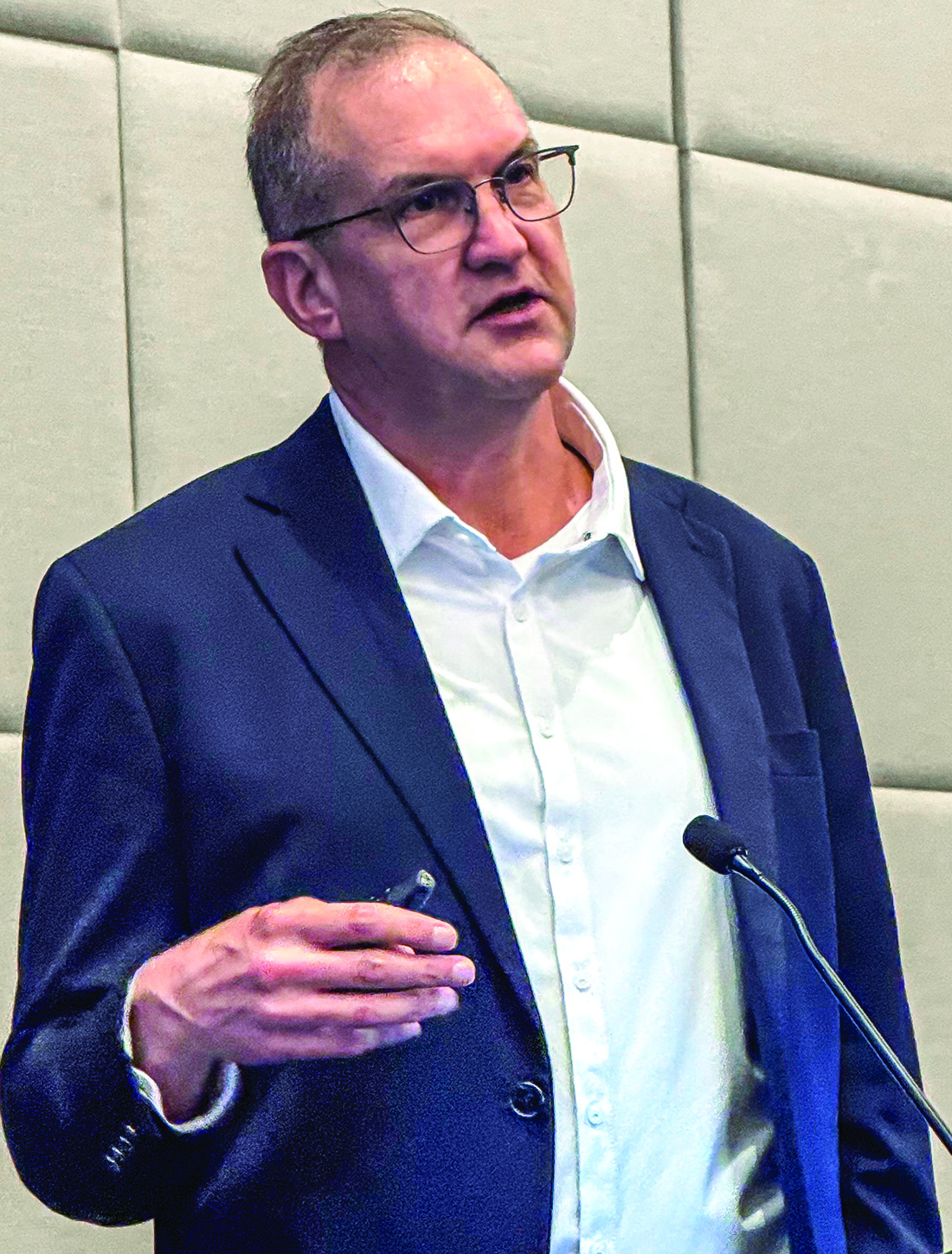
A post-lunch keynoter was Chris Beard, Vice President Building Products Research at John Burns Research and Consulting, who addressed the drivers impacting wood panel usage in housing.

Beard said building product spending will be $485 billion in 2026, down 0.6%, but while the market is essentially flat, it’s not necessarily static, as the mix of demand continues to shift.

He said new construction is “the near-term drag,” noting that the gap between unsold single family homes under construction and those completed remains large, with completed homes representing 27% of total inventory. He added that March single-family new home starts per community fell to the lowest March level in six years. Meanwhile, residential improvements spending continues to become more important, and is basically equal to the combination of new single-family homes and new multifamily homes.

Beard said the median U.S. home is now 44 years old, and new builds in the last 20 years represent just 16% of total stock. Homes built in the early 2000s construction boom now need significant upgrade.

While Beard expects a decline in single-family starts in 2026 of 2%, he does forecast a recovery in 2027, 2028 and 2029 of positive 4%, 3% and 4%, respectively. Multifamily will also decline in 2026 by 9%, followed by recovery of 8%, 7% and 7%.

He added that custom homebuilding starts have shown an uptick over the past few years, resulting in an increase to average home sizes. 

The real opportunity is in repair and remodeling, and one reason is that tax refunds this season are expected to be significantly larger than usual, providing a tailwind to remodeling. He says the number of homeowners in their peak remodeling years will grow slowly through 2028.

Also, home equity levels are near all-time high, far exceeding the peak of the 2000s housing bubble. Home equity-based financing is most often used for remodeling projects.

Another factor is “the disaster repair wild card.” Damages from billion dollar events are becoming more frequent over time.

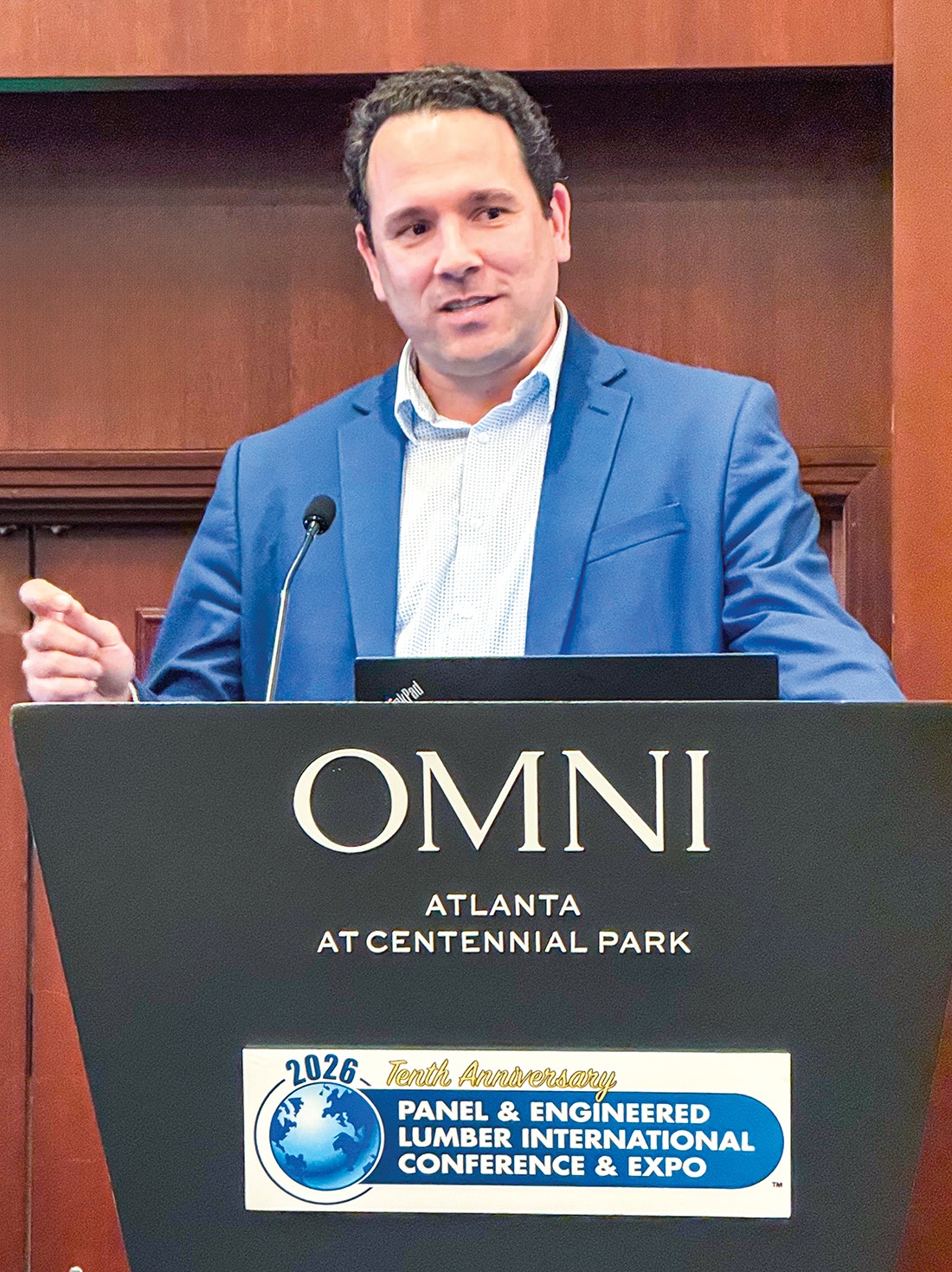
Guillermo Velarde, principal at AFRY Management Consulting, addressed the big picture for structural and composite panel markets. 

With regard to OSB, he said capacity will increase in North America, but new capacities will put installed capacity at risk, all the while dependent on construction.

He said the ongoing substitution pressure from OSB, driven by cost advantages and better technical properties, is limited future demand growth of softwood plywood.

He noted particleboard is a very consolidated market in North America. Competitive exports from contemporary, large-scale European particleboard factories are increasingly challenging the older and smaller mills in North America. But total market potential surpasses installed capacity.

In MDF, new announced capacity is expected to be competitive against imports due to high efficiency and competitive raw material costs. 

AFRY recommends operational improvement of the plant, including process improvements, variable cost and energy savings, and if necessary organizational changes. It also recommends logistics and Supply Chain Management improvements, and profitability actions; and changes in raw material sourcing strategies on one end and product portfolio diversification on the other, and an overall review an enhancement of innovation strategy.

There was much more during PELICE, including major discussions on Artificial Intelligence, Catastrophe Management, Wood Fiber, Project Develoment, Production Improvements, Additives & Applications, Veneer & Plywood Manufacturing, Fire and Safety Technologies, Mass Timber, and Energy & Emissions.


Latest News

Nordic Veneer Announces Closure 

Long-established veneer production facility Nordic Veneer is closing the veneer plant near Roseburg, Ore. it purchased from Forest Industries in 1960. Nordic Veneer was founded in 1954 by Dick Adams and Norm Jacobsen when they…

Find Us On Social

googletag.cmd.push(function() { googletag.display('div-gpt-ad-1548376916922-0'); });
googletag.cmd.push(function() { googletag.display('div-gpt-ad-1548376961890-0'); });
googletag.cmd.push(function() { googletag.display('div-gpt-ad-1548377005333-0'); });
Newsletter

The monthly Panel World Industry Newsletter reaches over 3,000 who represent primary panel production operations.

Subscribe/Renew

Panel World is delivered six times per year to North American and international professionals, who represent primary panel production operations. Subscriptions are FREE to qualified individuals.

Advertise

Complete the online form so we can direct you to the appropriate Sales Representative. Contact us today!

May 2026

May 2026

May 2026

COVER: Boise-Medford Pushes Veneer To The Limit

This issue takes you from the meeting rooms to the mill floor, from PELICE in Atlanta to Boise Cascade in Medford, Ore.

googletag.cmd.push(function() { googletag.display('div-gpt-ad-1548376180744-0'); });

Inside This Issue

UPDATE
  • USFS Begins Major Overhaul
  • Manthei Purchases Cahaba Veneer
  • Roseburg Restarts MDF Construction
  • USDA Streamlines NEPA Regulations 
  • Gresham Acquires Majority Of Molpus
  • Rayonier Sticks With Rayonier
    Boise Cascade In Medford

    Boise Cascade’s Madford plywood facility plays key role in EWP product support.

    PELICE In The Books

    Tenth PELICE Lives up to billing in Atlanta. Known as “the last conference in the world,” PELICE provided boost of enthusiasm for all segments of the panel industry.

    Supply LINES
    • Grenzebach Names VP Global Sales
    • Sweed Names Sales Manager
    • DO2 Announces Leadership Change
    • GreCon Acquires DMC From Bakelite
    Projects
    • Spearhead Plans Glulam Plant
    • Rainier Veneer Installs Charger
    • Rosboro Enhances Lumber Preparation
    • Inline Scrubber Propels Projects

    Find Us On Social

    googletag.cmd.push(function() { googletag.display('div-gpt-ad-1589916740199-0'); });

    PELICE Was Full Of Fleeting Moments

    Article by Rich Donnell, Editor-In-Chief

    What do Arauco, Boise Cascade, Canoe Forest Products, CIPA Lumber, Columbia Forest Products, Georgia-Pacific, Hood Industries, Huber Engineered Woods, Hunt Forest Products, Langdale, Louisiana-Pacific, Medite Smartply, Rayonier, Roseburg, RoyOMartin, Scotch Plywood, SmartLam, States Industries, Timber Products Co., TimberHP, Tolko Industries, West Fraser, Weyerhaeuser and Winston Plywood & Veneer have in common?

    For one, obviously, they produce wood-based products. Two, they had management and supervisory personnel attend the Panel & Engineered Lumber International Conference & Expo (PELICE), held in mid-April in Atlanta.

    I was fortunate to be able to talk with many personnel from these companies, and some also gave presentations during the event. But one of the unfortunate circumstances of being the co-chairman of PELICE is that my conversations are always brief, as I’m called away to check on an audiovisual issue in any of the four meeting rooms PELICE had going at one time or another. Though I must say, that given the number of rooms and number of speakers, the Pinnacle Live audiovisual team did an excellent job, and anything that fell through the cracks was probably on me. Or perhaps I was paged out of a conversation to check on the seating setup in a certain room, and so forth. But again I must say that our Panel World team on site in collaboration with the Omni and Shepherd personnel working the show stayed ahead of any serious pitfalls.

    And so as the days pass since the completion of the show, my recollection sharpens and these brief conversations with company personnel come back to me. For example I woke up in the middle of the night chuckling over a conversation with Michael Taylor of States Industries about the not-especially environmentally friendly alder peeling lathe that States once operated through its subsidiary, H.R. Jones Veneer, in Grand Ronde, Ore. I visited it in 1987. My wife heard me chuckling next to her, and when I told her what it was about, she rolled her eyes.

    I hope I told every one of these producer personnel that I appreciated their attendance and participation, and for combing the exhibitor aisles, but if I missed any, I’m telling you now. Thank you.

    And while I’m thanking everybody, here’s a thank you to the 94 exhibitor companies that set up in the Grand Ballroom North. These companies make a serious commitment to an event that basically lasts a day and half.

    Let’s face it. There’s no golf at PELICE, no play time around the pool. You can call it a “working” meeting, though there is plenty of fun to be had.

    When it was all said and done, the messages that I heard from these producer companies is to stay focused on what you do best but also recognize the building trends, to modernize your facilities but to never take your capital spending for granted, and to build relationships not only with your customers but also with your community. They are simple messages that sometimes get lost in the shuffle.

    googletag.cmd.push(function() { googletag.display('div-gpt-ad-1548375988914-0'); });

    Want More Content?

    Panel World is delivered six times per year to North American and international professionals, who represent primary panel production operations. Subscriptions are FREE to qualified individuals.

    googletag.cmd.push(function() { googletag.display('div-gpt-ad-1548376916922-0'); });
    googletag.cmd.push(function() { googletag.display('div-gpt-ad-1548376961890-0'); });
    googletag.cmd.push(function() { googletag.display('div-gpt-ad-1548377005333-0'); });
    Newsletter

    The monthly Panel World Industry Newsletter reaches over 3,000 who represent primary panel production operations.

    Subscribe/Renew

    Panel World is delivered six times per year to North American and international professionals, who represent primary panel production operations. Subscriptions are FREE to qualified individuals.

    Advertise

    Complete the online form so we can direct you to the appropriate Sales Representative. Contact us today!

    PELICE 2026 in Atlanta: Industry Leaders, Big Investments, And A Clear Path Forward

    PELICE 2026 in Atlanta: Industry Leaders, Big Investments, And A Clear Path Forward

    PELICE 2026 in Atlanta: Industry Leaders, Big Investments, And A Clear Path Forward

    The 10th Panel & Engineered Lumber International Conference & Expo (PELICE) lived up to its reputation as a can’t-miss industry event, bringing 470 attendees, 95 exhibitors, and 41 speakers to Omni Atlanta Hotel at Centennial Park on April 16–17.

    Co-hosted by Panel World and Georgia Research Institute, the biennial conference—first launched in 2008—offers a timely pulse check on the panel and engineered lumber industries. The 2026 edition reinforced that role, delivering a mix of market realism, strategic clarity, and forward-looking optimism.

    PELICE’s milestone 10th event carried added significance, including recognition of 18 exhibitor companies that have participated in all 10 conferences. Co-Chairmen Rich Donnell and Fred Kurpiel reflected on the event’s origins, with Kurpiel credited for first envisioning the conference and partnering with Panel World nearly two decades ago.

    The audience included representatives from 25 producer companies, with executive leadership on hand to address a rapidly evolving business environment.


    googletag.cmd.push(function() { googletag.display('div-gpt-ad-1548375988914-0'); });

    Leadership Perspectives: Strategy, Culture, and Discipline

    Georgia-Pacific: Building Value Through People

    David Neal, Executive Vice President of Building Products, Georgia-Pacific, opened with a message centered on culture and long-term value creation.

    Neal emphasized the company’s “Principle Based Management” framework, rooted in stewardship and human progress, noting the importance of internal development and external relationships: “Building relationships and trust” remains fundamental to both business success and community impact.

    He highlighted employees who rose through the organization, reinforcing how long-term investment in people translates into stronger partnerships and evolving customer solutions.


    Boise Cascade: Staying Focused in a Volatile Market

    Rob Johnson, Senior Vice President of Manufacturing Operations at Boise Cascade, addressed the company’s evolution into one of North America’s largest producers of engineered wood products.

    Despite market pressures, Boise has resisted broad diversification, instead leaning into its core strengths: “We are an EWP-focused business. We consider plywood a byproduct of strength-rated veneer production.”

    Johnson also pointed to the company’s integrated distribution model as a stabilizing force, helping smooth financial performance across fluctuating markets.


    Roseburg: Billion-Dollar Investments, Tight Execution

    Fresh off announcing the restart of construction on a new medium-density fiberboard (MDF) facility in Oregon, Jim Salchenberg of Roseburg detailed a sweeping capital investment strategy.

    From 2021–2024, the company approved more than 400 projects totaling $1.1 billion, delivering them within 3% of budget despite post-pandemic challenges.

    Salchenberg distilled that success into three principles: “Own the budget… protect the scope relentlessly… and never accept ‘it takes what it takes, and it costs what it costs.’”

    Engineered Wood: A Structural Shift, Not a Cycle

    One of the clearest themes at PELICE 2026 was the accelerating role of engineered wood products (EWP).

    Lofton Beasley of Weyerhaeuser framed the shift in unmistakable terms: “These forces are structural, not cyclical.”

    He pointed to long-term changes in construction, including labor shortages, demand for speed and predictability, and increasing reliance on prefabricated systems. These trends are driving adoption of engineered solutions that reduce variability and improve efficiency.

    Beasley emphasized that EWP is central to long-term strategy. “The message is clear: EWP is not peripheral. It is a central mechanism for translating timberland strength into durable, higher-return growth.”

    Weyerhaeuser is backing that strategy with capacity expansion, including a new TimberStrand facility designed to convert lower-quality logs into higher-value products.

    Housing Market Reality: Short-Term Pressure, Long-Term Opportunity

    Market analysis from Chris Beard of John Burns Research and Consulting provided a grounded look at demand drivers.

    “New construction is the near-term drag,” Beard said, pointing to elevated housing inventory and slower starts. However, the broader picture is more nuanced.

    With the median U.S. home now 44 years old, aging housing stock is fueling a surge in repair and remodeling activity—now rivaling new construction in total spending.

    Beard highlighted several tailwinds, including rising home equity levels, larger tax refunds supporting renovation spending, and increasing frequency of disaster-related repairs. 

    While new construction may soften in the near term, Beard said forecasts point to a rebound beginning in 2027.

    Market Dynamics: Shifting Materials and Global Pressure

    Guillermo Velarde of AFRY Management Consulting outlined broader structural changes across panel markets:

    • OSB continues to gain share due to cost and performance advantages

    • Plywood faces ongoing substitution pressure

    • Particleboard markets are tightening under competition from large-scale European producers

    • MDF investments are ramping up, with new capacity expected to compete more effectively with imports

    AFRY’s recommendations focused on operational efficiency, supply chain optimization, and product diversification as key levers for future competitiveness.

    In addition to keynote sessions, PELICE 2026 featured deep dives into:

    • Artificial Intelligence in manufacturing

    • Catastrophe and risk management

    • Wood fiber sourcing and optimization

    • Veneer and plywood production advances

    • Fire and safety technologies

    • Mass timber construction

    • Energy use and emissions reduction

    Nearly two decades after its launch, PELICE continues to fulfill its original mission: Bringing the industry together to share knowledge, confront challenges, and identify opportunities.

    The 2026 event made one thing clear, while markets may fluctuate, the industry is actively adapting through innovation, disciplined investment, and a sharpened strategic focus on engineered solutions.

    As Lofton Beasley put it, the forces shaping the future aren’t temporary—they’re foundational.

    And based on the energy in Atlanta, the industry is ready to meet them head-on.

    Latest News

    Nordic Veneer Announces Closure 

    Long-established veneer production facility Nordic Veneer is closing the veneer plant near Roseburg, Ore. it purchased from Forest Industries in 1960. Nordic Veneer was founded in 1954 by Dick Adams and Norm Jacobsen when they…

    Find Us On Social

    googletag.cmd.push(function() { googletag.display('div-gpt-ad-1548376916922-0'); });
    googletag.cmd.push(function() { googletag.display('div-gpt-ad-1548376961890-0'); });
    googletag.cmd.push(function() { googletag.display('div-gpt-ad-1548377005333-0'); });
    Newsletter

    The monthly Panel World Industry Newsletter reaches over 3,000 who represent primary panel production operations.

    Subscribe/Renew

    Panel World is delivered six times per year to North American and international professionals, who represent primary panel production operations. Subscriptions are FREE to qualified individuals.

    Advertise

    Complete the online form so we can direct you to the appropriate Sales Representative. Contact us today!