
Support For Tall Timber Reaches New Heights In ICC Building Code

Prescriptive requirements for wood structures up to 18 stories were among the additions preliminarily approved for the International Building Code following the work of the International Code Council’s ad-hoc Tall Wood Buildings Committee.

Wood is widely recognized as a carbon-neutral building material, but its use as a structural material has been mostly limited to residential and low-rise buildings due to its combustible nature. Through recent advances in manufacturing and engineering, wood in the form of mass timber products is increasingly attracting interest as a structural system for tall buildings.

Portland, Ore., recently saw the completion of the eight-story Carbon12, currently the tallest wood building in the United States. Still, progress has been slow in this country as compared to Europe or Canada, where the 18-story-tall Brock Commons, in Vancouver, stands as the tallest timber structure in the world. One significant issue inhibiting widespread adoption in the U.S. is prescriptive building codes, which currently limit the height of wood buildings to 85 feet, or six stories. In December 2015, the International Code Council (ICC) formed an ad-hoc committee to study the impact of tall wood buildings on the building code with the membership voting on the adoption of proposed changes on Oct. 24.

The ICC’s International Building Code (IBC) classifies a high-rise building as any building with an occupied floor 75 feet above the lowest level at which fire department vehicles can access. The 2018 IBC defines heavy timber structural members as Type IV construction, which also includes a range of wood products, such as solid sawn timber, glue-laminated members, and composite wood members. The term mass timber, however, comprises both heavy timber as well as engineered products, many of which the IBC does not reference, such as cross-laminated timber (CLT).

Heavy timber construction is currently limited to a height of 85 feet. Architects can design taller wood structures, but they must demonstrate that the design meets the prescribed code and performs as well or better than a similar concrete or steel structure. This can be a costly and time-consuming process, requiring extensive testing and documentation on the part of the design team and building owner.

Read more on this from Architect Magazine at https://www.architectmagazine.com/technology/support-for-tall-timber-reaches-new-heights-in-the-building-code_o.
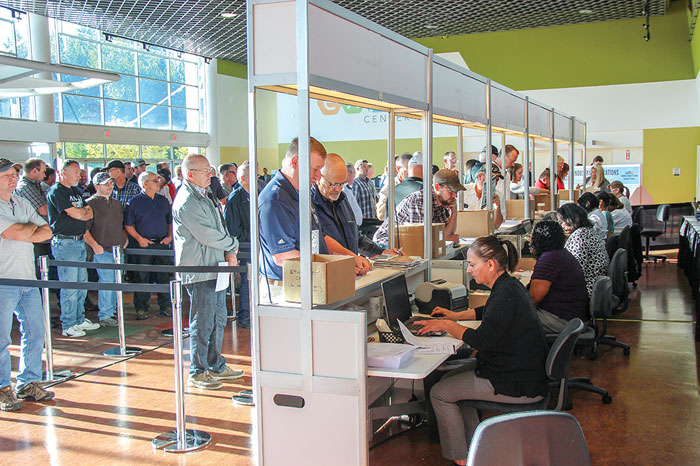
Turbulent Decade? TP&EE Has The Cure

Turbulent Decade? TP&EE Has The Cure

Turbulent Decade? TP&EE Has The Cure

Looking back at the events of 10 years ago this fall, it’s been a turbulent decade indeed: Remember John McCain, down in the polls, suspending his presidential campaign and heading back to DC to help “save” the U.S. economy, which was in free-fall by the end of 2008, losing as many as 200,000 jobs a month before the carnage slowed? The rest is indeed history: The Great (Banker) Bailout, The Great Recession and the sluggish recovery that’s still a bit sluggish in some ways a decade later. I distinctly remember economist Roger Tutterow at the 2010 Panel World Panel & Engineered Lumber Conference & Expo in Atlanta telling a roomful of skeptics that, technically, the economy had actually been getting better since summer 2009. He was right, but it sure didn’t make the audience feel much better.

The early years of the past turbulent decade featured the lowest prices for many forest products since the Great Depression of the 1930s.

It’s hard to imagine those business conditions 10 years ago today, as the forest products industry enjoys some of its highest prices ever—ever—especially on the lumber side. Right now there’s swelling demand and much improved or improving pricing throughout lumber and panel markets.

Right now, producers are running wide open, and trying to schedule maintenance, much less major capital improvements, can be tough. There’s also a growing backlog among equipment and system vendors that have orders and projects scheduled well into the future.

Of course, most everyone would rather grapple with these “good” problems to have during positive market conditions like right now. But good problems can also be tough to solve.

One common denominator with all these “good problem” issues is labor: finding not only people but the right people, training them and in many cases introducing them to the industry. All over, people are looking for more and better employees  in an overall improving business environment.

Labor is also a driving force for two trends the forest products industry needs to watch closely: mass timber building concepts and more pre-fab construction in general. Mass timber offers lower labor requirements for installation and quicker overall construction times, and in more traditional building there’s a movement to take as much labor off the job site as possible through pre-fab construction, and moving (and automating) as much labor as possible on a factory floor instead of on the job.

The forest products industry will be asked to provide products that facilitate both trends, and smart operators will keep not only a close eye on current operations, but also an eye on trends and changes that might shape the future not only for the big picture but also in their backyards.

As the forest products industry gathers in Portland, Ore. for the 2018 Timber Processing & Energy Expo October 17-19, these issues will be on the minds of both visitors and exhibitors: more technology and automation leading to smarter, more efficient operations—with the right people to operate and mange them.

At the Portland Expo Center in mid October—timberprocessingandenergyexpo.com—there’ll be plenty of both.

Article by Dan Shell,
Managing Editor

Latest News

Webster Industries Purchases Renold

Webster Industries Purchases RenoldMPE Partners along with its portfolio company, Webster Industries, announced the closing of its acquisition of...

Find Us On Social

Newsletter

The monthly Panel World Industry Newsletter reaches over 3,000 who represent primary panel production operations.

Subscribe/Renew

Panel World is delivered six times per year to North American and international professionals, who represent primary panel production operations. Subscriptions are FREE to qualified individuals.

Advertise

Complete the online form so we can direct you to the appropriate Sales Representative. Contact us today!

Oregon Becomes First State To Legalize Mass Timber High Rises

Thanks to a recent addendum to Oregon’s building code, the state is the first in the country to allow timber buildings to rise higher than six stories without special consideration.

Portland has become something of a hotbed for timber innovation as of late. Carbon12, PATH Architecture’s eight-story glulam and cross-laminated timber (CLT) tower with a steel core, recently became the country’s tallest timber building and was set to be surpassed by LEVER Architecture’s 12-story Framework. Alas, that project was put on hold due to mounting financial difficulties last month, but it seems the precedent that the project achieved in securing a building permit from the State of Oregon and City of Portland will live on.

The timber allowance comes courtesy of Oregon’s statewide alternate method (SAM), a state-specific program that allows for alternate building techniques to be used after an advisory council has approved the “technical and scientific facts of the proposed alternate method.” The allowance comes after the International Code Council (ICC)–the nonprofit group that Oregon models its building codes after–established the ICC Ad Hoc Committee on Tall Wood Buildings in 2015 to explore the benefits and challenges of using timber in tall buildings.

A Committee Action Hearing was held in April of this year, where the Ad Hoc Committee, made up of code experts, stakeholders, and industry members presented their findings. All 14 of the committee’s suggestions were adopted, introducing standards and best practices for fireproofing, the load-bearing potential of CLT and heavy timber, water resistance, sealing, seismic ratings, and more.

Three new building classifications were introduced as a result: Type IV A, timber buildings permitted up to 18 stories and 270 feet tall, Type IV B, timber buildings with a maximum height of 12 stories and 180 feet, and Type IV C, which is permitted to rise nine stories and 85 feet tall at maximum. The shortest of the timber typologies is allowed to use exposed structural timber as an interior finish, whereas the tallest, type A, must enclose all exposed surfaces and include a three-hour fire-resistance rating for the structural elements.

Read more on this from The Architects Newspaper at https://archpaper.com/2018/08/oregon-legalize-mass-timber-high-rises/.

Katerra Merges With KEF Infra, Already Has $3.7 Billion In Bookings

Offsite design-build company Katerra and India-based manufacturing technology company KEF Infra have announced a merger that will see the newly formed KEF Katerra begin conducting operations in India and the Middle East. KEF Katerra, according to MEP Middle East, already has $3.7 billion in bookings.

Both companies use offsite manufacturing and technology as part of the “end-to-end” building services they provide. KEF Infra also uses robotics and automation in its manufacturing business and produces items like pre-cast concrete, prefabricated bathroom pods and aluminum and glazing facades. Katerra said it will also employ KEF Infra’s pre-cast technology in the U.S. market.

In addition to housing, the company will focus on building community infrastructure assets like hospitals and schools. Post-merger Katerra will have a total of 20 offices and 3,400 employees around the world.

Earlier this month, Katerra sealed the second of two acquisition deals in as many weeks. Those transactions, intended to increase the companies’ design capabilities in the U.S., saw the company enter into agreements with Portland, Oregon-based Michael Green Architecture and Lord Aeck Sargent in Atlanta. After those deals were complete, Katerra had 31 U.S. state architecture licenses plus credentials in British Columbia and Alberta, Canada, and saw its staff size double. Green’s area of expertise is in the use of mass timber, and it designed the T3 mass timber office building in Minneapolis. One of Lord’s focuses is sustainable, urban projects.

In addition to its plans for growth through mergers and acquisitions, Katerra also said it would open six manufacturing plants by March 2019, including a Spokane, Washington, facility that will produce mass timber. The 250,000-square-foot plant is expected to generate 4.6 million cubic feet of cross-laminated timber annually. The five other Katerra plants will manufacture standard wood panels and trusses.

From Construction Dive: https://www.constructiondive.com/news/katerras-new-company-with-indian-manufacturer-kef-already-has-37-billion/526840/

Online TP&EE Registration Is Free

Online TP&EE Registration Is Free

Organizers of the 2018 Timber Processing & Energy Expo (TP&EE) announce that free online registration is now open for the big machinery event to be held October 17-19 at the Portland Exposition Center in Portland, Ore. Approximately 190 exhibitors will display equipment and technologies catered to the structural veneer, plywood, mass timber, engineered wood products and lumber industries. Held every other year, this is the fourth TP&EE hosted by Panel World and Timber Processing magazines, and produced by Hatton-Brown Expositions LLC. Personnel from wood products companies and mills registering online receive free admission to all three days of TP&EE. (Walk-up fee is $20 per day). Those with equipment companies who are not exhibiting are required to pay a fee.The 2016 TP&EE attracted 1,600 non-exhibitor personnel, representing 110 wood products producer companies and hundreds of individual mill operations. “There is tremendous action in the plywood and lumber industries right now, and we anticipate this TP&EE will be the busiest yet as mills continue to take advantage of excellent building products markets and wood products prices,” comments Show Director Rich Donnell. Register at www.timberprocessingandenergyexpo.com