by Web Editor | Feb 20, 2015 | News
From: Panel World Staff
Oregon State University has begun an initiative to build a $60 million complex to accelerate its forestry education programs and research on advanced wood products at Corvallis, Ore. The Oregon Forest Science Complex will encompass renovation of existing OSU campus facilities as well as new construction; showcase innovative uses of wood in building design; and allow the College of Forestry to help meet the world’s growing demand for energy efficient, tall buildings made from sustainable building products.
The project includes a $30 million fundraising goal. Once philanthropic commitments are secured, OSU will seek matching bonds from the state. Bonding for the project was included in the governor’s capital budget for consideration in the upcoming legislative session.
The initiative was announced in Portland at the Oregon Leadership Summit of the Oregon Business Plan by Thomas Maness, the Cheryl Ramberg Ford and Allyn C. Ford Dean of the College of Forestry.
“We are excited about leading a new national effort to advance the science and technology necessary to primarily use wood in the construction of 5- to 20-story buildings,” Maness says. “Developing these new, competitively priced, environmentally friendly products will not only increase the value of Oregon’s natural resources, but also grow jobs in our rural communities, with substantial benefits for our state.”
Seeking new methods to reduce the carbon footprint of high-rise construction, architects and engineers from Austria to Canada, Norway and New Zealand have begun constructing buildings with exceptionally strong wood products. This cross-laminated timber is made of strips of wood glued together across the grain, and panels can be more than 1 foot thick and 80 feet long.
Read more on this story in the March issue of Panel World…
by Site Manager | May 1, 2011 | Taking Stock
Story by Rich Donnell,
Editor-in-Chief
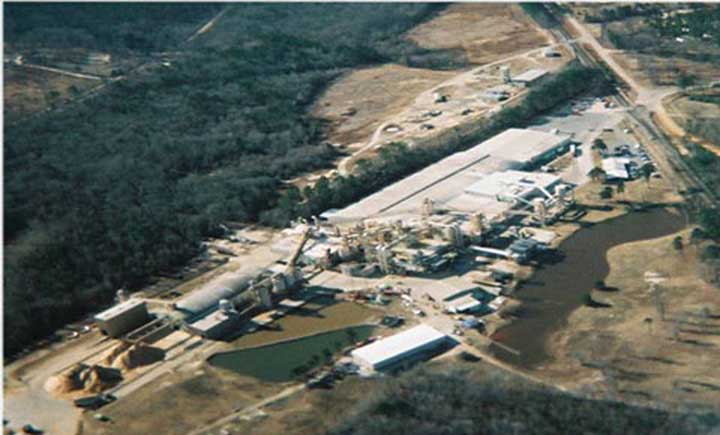
One of the more aggressive companies in recent years is Flakeboard, the Canada-based manufacturer of MDF, particleboard, melamine laminated products and other value-added items. We’ve been hearing a lot about Flakeboard’s investment in several melamine laminating lines, but we were wondering about its primary manufacturing plants, especially the ones it purchased from Weyerhaeuser back in 2006, and most specifically of these the MDF plant at Malvern, Ark.
Sometimes we visit plants and, as Forrest Gump said, “you never know what you’re going to get.” Especially a plant like Malvern, which has been around since 1968 and operated under four owners. Frankly, Malvern had fallen off our radar, until recently when we heard they had done some work there. During these recessed economic times, the word that a mill “has done some work” causes the editors at Panel World magazine to perk up. We asked for a visit and Flakeboard most graciously opened its Malvern doors.
While we enjoy visiting brand spanking new greenfield operations (see Uniboard-Moncure article, May 2010), we really get a charge out of touring an older plant that has undergone significant work. This is certainly the case at Malvern. For example, the old Washington Iron Works presses have undergone a total makeover, and the sanding line is now totally modernized. Operators weren’t shy about expressing their exuberance with the upgrade work and with the look of the “new” board product flowing through the plant.
At Malvern there is a spirit of re-birth, for two reasons really:
A) Flakeboard has committed some serious dollars to improving technologies throughout the plant.
B) Flakeboard is committing some serious time to improving the work force culture.
A and B don’t necessarily go hand in hand; that is, we’ve visited many a plant that did A and ignored B. From an editor’s perspective, these plants don’t make for a very enlightening visit.
You don’t necessarily have to do A while doing B, but it would seem that the implementation of B will become more effective if it’s tied into A.
However it’s done, we seem to be seeing more plants concentrating on their work force culture. There are lots of definitions of work force culture, and I’m sure there are consultants who know the exact definition, but the common thread appears to be greater participation and accountability for the work force. Pushing responsibility and decision making down the ladder if you will. Flakeboard at Malvern has gone so far as to strike the term “supervisor” from its glossary.
Of course employee empowerment is not a new concept. And we’ve seen many companies who began to change its work force culture, only to have an economic recession or an economic boom cast aside the noble notion.
Flakeboard is not one of these companies. For Flakeboard, employee involvement is part of its business philosophy. The plant manager at Malvern, Tom Quesenberry, told us that what makes the new cultural shift at Malvern so interesting is that he can look at other Flakeboard plants where the culture is embedded and clearly see where Malvern is headed.
It’s amazing what you can do at a 43-year-old composite board plant.