
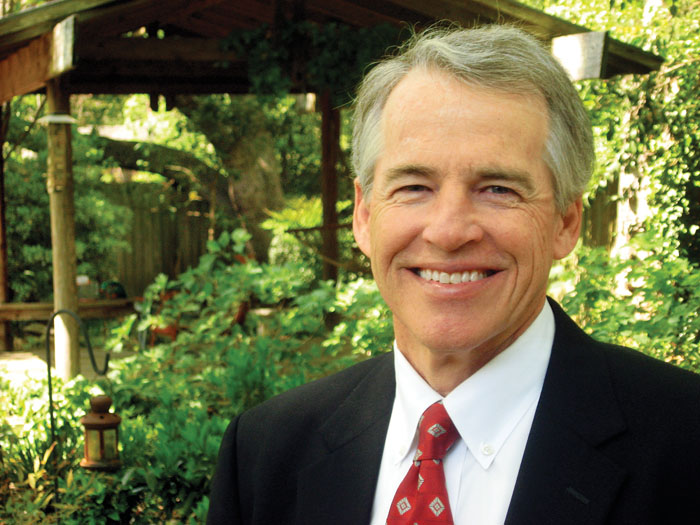
PELICE Will Address Greenfield Projects

PELICE Will Address Greenfield Projects

Written By: Rich Donnell

Organizers of the 2016 Panel & Engineered Lumber International Conference & Expo (PELICE) have announced several keynoters from the structural panel segment of the industry. Keynoters from the non-structural composite side will be announced soon.

The fifth biennial PELICE will be held April 7-8, 2016 in the Grand Ballroom North of the Omni Hotel at CNN Center in Atlanta, Georgia, USA. Hosted by Panel World magazine, PELICE in 2014 attracted 420 industry professionals who enjoyed 10 keynote presentations as well as forecasts and technical presentations delivered by 45 industry experts, supported by 75 equipment and technology companies that exhibited in the Ballroom.

PELICE will be immediately preceded by the fourth biennial Wood Energy Conference & Expo on April 5-6.

“The 2014 PELICE was refreshing because it was the first one going back to 2008 where all the talk wasn’t about the recession,” comments Rich Donnell, co-chairman of PELICE and editor-in-chief of Panel World magazine. “There was a lot of enthusiasm about projects-in-the-making. I believe that enthusiasm will continue into PELICE 2016 as housing and remodeling markets continue to climb. There will also be a definite buzz in the air at PELICE because it will be held right in the middle of the primary season for the 2016 presidential election.”

Donnell also notes that since the last PELICE there have been a number of production technology developments that will be addressed at PELICE 2016, as well as developments in engineered wood products, such as cross laminated timber, and in composite panels.

“We’ve rounded up a great lineup of keynote speakers from the structural segment of the industry,” Donnell adds. “We’ll now turn our attention to the non-structural side for additional keynoters.”

Donnell says two keynoters—Jonathan Martin, chairman & CEO of Louisiana-based Martin Companies, L.L.C.; and Steve Swanson, president and CEO of Oregon-based Swanson Group, will speak under the heading: “If I Could Build a New Plant In 2016, Here’s What I Would Do.”

Martin will address the development of Martco’s new oriented strandboard plant being built in Corrigan, Texas. The company currently operates an OSB plant in Oakdale, La., which it built and started up in 2006. Its history with OSB dates back to 1982 when it built and started up a plant in Le Moyen, La. It also operates a softwood plywood plant in Chopin, La., another greenfield project.

Martin
Swanson will address the new plywood and veneer facility Swanson Group is building in Springfield, Ore. to replace the plant that a fire destroyed in July 2014. Swanson Group operates veneer, plywood and lumber operations in Glendale and Roseburg, Ore. Swanson Group also purchased Olympic Panel Products in Shelton, Wash. in March and is relocating those assets to the new Springfield facility.

Swanson
Also on tap is Kurt Liebich, CEO of RedBuilt and New Wood Resources, both companies part of Atlas Holdings. RedBuilt manufactures I-joists, open web trusses and LVL at several manufacturing plants primarily in the Western U.S.

Liebich joined RedBuilt’s predecessor, Trus Joist, in 1994 and served in numerous senior management roles. He remained with the company when Weyerhaeuser acquired it in 1999, and was appointed vice president of Trus Joist and later VP of marketing for Weyerhaeuser’s iLevel division. When Atlas Holdings acquired the former commercial division of Trus Joist from Weyerhaeuser in 2009, it appointed Liebich as president and CEO of the company, which they named RedBuilt.

Atlas Holdings also appointed Liebich as president and CEO of Wood Resources LLC, which later sold with two plywood mills to Boise Cascade. Atlas subsequently formed New Wood Resources with Liebich as CEO. New Wood Resources operates the long-running plywood plant in Omak, Wash., and is also building a new plywood plant in Louisville, Miss., known as Winston Plywood & Veneer.
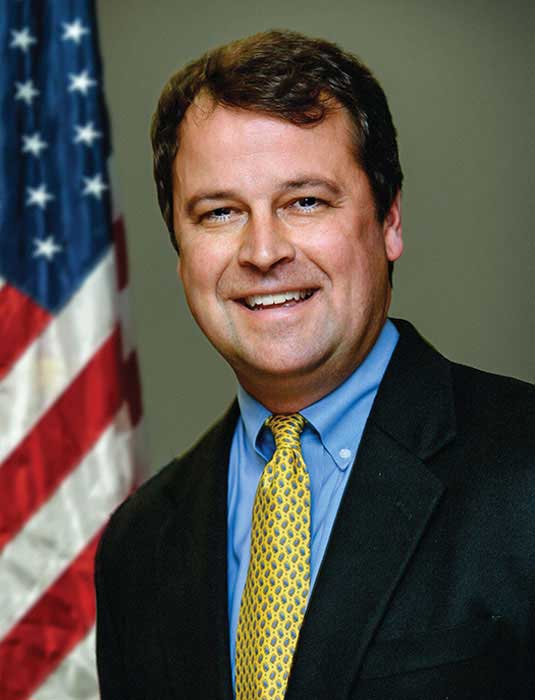
Liebich
Brian Carlson, president of OSB manufacturer Huber Engineered Woods LLC, will also join the keynoters lineup. Huber operates five OSB plants. Carlson has worked at Huber for 20 years and in various capacities prior to his promotion to president, including as product and field sales director, VP of sales & marketing and overseeing business development and strategy.

Carlson
The remaining keynoters as well as the complete agenda of speakers and technical session topics will be released in September.

As of early August, numerous equipment and technology companies had already signed on as exhibitor sponsors of PELICE. Leading the way is Babcock & Wilcox MEGTEC, which is a Gold sponsor not only for PELICE, but for the preceding Wood Energy Conference & Expo.

Early Silver sponsor exhibitors for PELICE include Baumer Inspection, Biele Wood, Brunette, Cogent Industrial Technologies, Con-Vey, Dieffenbacher, Electronic Wood Systems, Evergreen Engineering, GP Chemicals, Globe Machine Manufacturing, Hexion, Imal-Pal, M-E-C, Merritt Machinery/Meinan Machinery, Mid-South Engineering, MoistTech, Raute, Sweed Machinery, TSI/ Sigma Thermal, USNR, Venango Machine, Veneer Services, Westmill Industries, Willamette Valley, as well as Bronze sponsors Ventek and GreCon.  (Brunette, Cogent, Con-Vey, Dieffenbacher, Evergreen Engineering, GreCon, Imal-Pal, M-E-C, Mid-South Engineering, MoistTech, TSI-Sigma Thermal, Veneer Services/Bio­mass Engineering & Equipment will also join B&W MEG­TEC as exhibitors in the Wood Energy Conference & Expo.)

For more information visit https://pelice-expo.com/.

How Two Operations Battled Their Way Back

How Two Operations Battled Their Way Back

How Two Operations Battled Their Way Back


Article by Rich Donnell, Editor-In-Chief, Panel World November 2014

We didn’t intend for this issue to have the theme of “comebacks,” but that’s how it worked out. The two main mill operation articles—on Tolko Industries OSB in Slave Lake, Alberta, and the Omak Wood Products plywood plant in Omak, Wash.—certainly fall into this category. However, they bring quite different stories to the table.

The beginnings of the Tolko OSB plant at Slave Lake, also called the Athabasca OSB operation, go back to 2005 when the company announced it was building the plant and putting in the world’s longest continuous press at more than 230 ft. The timing, however, turned out to be impeccably bad. Just as the plant was coming up, the building market was crashing, and after a short period of production, the plant shut down in February 2009.

The article that begins on page 20 goes into some detail on how the OSB operation lived to fight another day, with a newly hired work force, and with some equipment and product tweaking. It resumed production last December. It’s a feel-good story, written by Andrew Macklin.

I’m not sure “feel-good” is the correct description of the re-startup of the Omak Wood Products plywood plant. The word “historical” comes more to mind.

Does anybody out there remember Biles-Coleman Lumber Company? J.C. Biles and Nate Coleman were the partners who in 1921 bought a sawmill and timber harvesting rights from the Omak Fruit Growers Inc. on the slopes of Omak Mountain and a box plant in Omak. In 1924, Biles-Coleman built a new sawmill in Omak, and this is really the roots of today’s Omak Wood Products.

Coleman left the business fairly early on, but the company stuck, and so did Biles, who led the development of a large lumber business and extensive logging and railroad infrastructure.

The company continued to prosper with multiple sawmills and then built a plywood mill in 1971.

Then the Omak site began a long roller coaster ride, starting when Crown Zellerbach purchased Biles-Coleman in 1974. In 1985, British financier Sir James Goldsmith won control of the forest products portion of Crown Zellerbach, including the Omak operation, and operated it as part of Cavenham Forest Industries.

Many of us remember, in late 1988, when the 635 union members of Omak Wood Products purchased the sawmill, plywood mill and 47,000 acres from Goldsmith, and formed an ESOP (employee stock ownership plan). That’s how the business ran until 1997 when it filed for bankruptcy and was subsequently purchased by Quality Veneer & Lumber. But that entity experienced financial stress as well, and in 2001 the Confederated Colville tribes purchased the Omak operation and operated it as Colville Indian Power and Veneer.

The tribes operated the plant until 2009, when the recession forced its closure. It sat in silence until 2013 when New Wood Resources of Atlas Holdings signed a long-term lease agreement with the Colville tribes to manage the operation.

Talk about staying power. Our writer, Dan Shell, picks up the story from there beginning on page 10.

Tolko Slave Lake and Omak Wood Products are back in business. That’s good news for the workers and their families, their communities, and for our industry.

RELATED ARTICLES

PANEL WORLD JULY 2020


Latest News

Weyco Expects Strong Growth

Weyco Expects Strong Growth Weyerhaeuser Co. hosted an Investor Day in December and outlined the company's strategic growth plan and financial...

Find Us On Social

Newsletter

The monthly Panel World Industry Newsletter reaches over 3,000 who represent primary panel production operations.

Subscribe/Renew

Panel World is delivered six times per year to North American and international professionals, who represent primary panel production operations. Subscriptions are FREE to qualified individuals.

Advertise

Complete the online form so we can direct you to the appropriate Sales Representative. Contact us today!

Arizona Moves Forward Without New OSB Plant

Arizona Moves Forward Without New OSB Plant

Arizona Moves Forward Without New OSB Plant

Article by Dan Shell, Managing Editor, Panel World (2012)

At first glance, the scene sounds like the beginning of a good ol’ Western movie: The black-hatted outsider moves in at the last minute and snakes out the local boys who had built up years of goodwill hoping to be awarded a long-awaited business opportunity.

Yet in the story of Arizona Forest Restoration Products (AZFRP) losing out on a major northern Arizona forest stewardship contract to Montana-based Pioneer Forest Products after years of painstaking groundwork with a variety of groups and interests (page 16), there are no real black hats. And despite the lost opportunity to build the westernmost OSB plant in the U.S. and close to key Southwest markets, the good news is badly-needed forest health restoration work in the region will go forward on a scale never seen before on public lands in the U.S.

But it is an interesting story, covering coalition building, dueling economic visions, federal bureaucracy, community development and a ponderosa pine ecosystem in desperate need of restoration work from thinning to riparian zone protection and much more.

That’s the reason we decided to devote the space to a story about an OSB plant that apparently will never exist. That and because of our ongoing communication line with former AZFRP CEO Pascal Berlioux, who contacted Panel World years ago to inform us about what they were doing, then sent periodic updates on AZFRP’s progress in building support for its proposal among Four Forest Restoration Initiative (4FRI) stakeholder members.

The 4FRI project came about after Arizona federal lands officials, seeing vast acreages hammered by wildfires during the past decade, had to come up with a new way of addressing forest health conditions in the state. But the traditional timber sale-by-sale process wouldn’t make much of a dent in the 2.4 million acres across four national forests that need thinning and restoration work.

That’s why AZFRP’s OSB proposal was important: By focusing on small timber, the operation sought to avoid another traditional timber sale problem with sawmills in the inherent pressure to cut larger logs that, right or wrong, inevitably leads to court and nothing getting done in the woods. Also, AZFRP had gained unprecedented agreements (for what they’re worth) and support from major environmental groups for its OSB plant proposal that would in turn pay for the forest health restoration work that organizations on all sides of the issue agree need to be done.

Instead of an OSB plant to utilize the small-diameter raw material coming off an unprecedented 300,000 acres over 10 years in the first of several large-scale stewardship contracts, the Forest Service chose a sawmill operation producing edge-glued panels for door and window stock, plus an associated biofuel plant. Some of the reasons why make for quite interesting reading.

Yet while some have questioned federal actions in awarding the contract, the good news is that in this story, the forest products industry guys—sawmillers and OSB producers alike—are the ones wearing the white hats as they ride to the rescue and provide the investment that’s making the 4FRI restoration work possible.

RELATED ARTICLES

NEWLIFE GAINS FULL PRODUCTION

Latest News

Weyco Expects Strong Growth

Weyco Expects Strong Growth Weyerhaeuser Co. hosted an Investor Day in December and outlined the company's strategic growth plan and financial...

Find Us On Social

Newsletter

The monthly Panel World Industry Newsletter reaches over 3,000 who represent primary panel production operations.

Subscribe/Renew

Panel World is delivered six times per year to North American and international professionals, who represent primary panel production operations. Subscriptions are FREE to qualified individuals.

Advertise

Complete the online form so we can direct you to the appropriate Sales Representative. Contact us today!